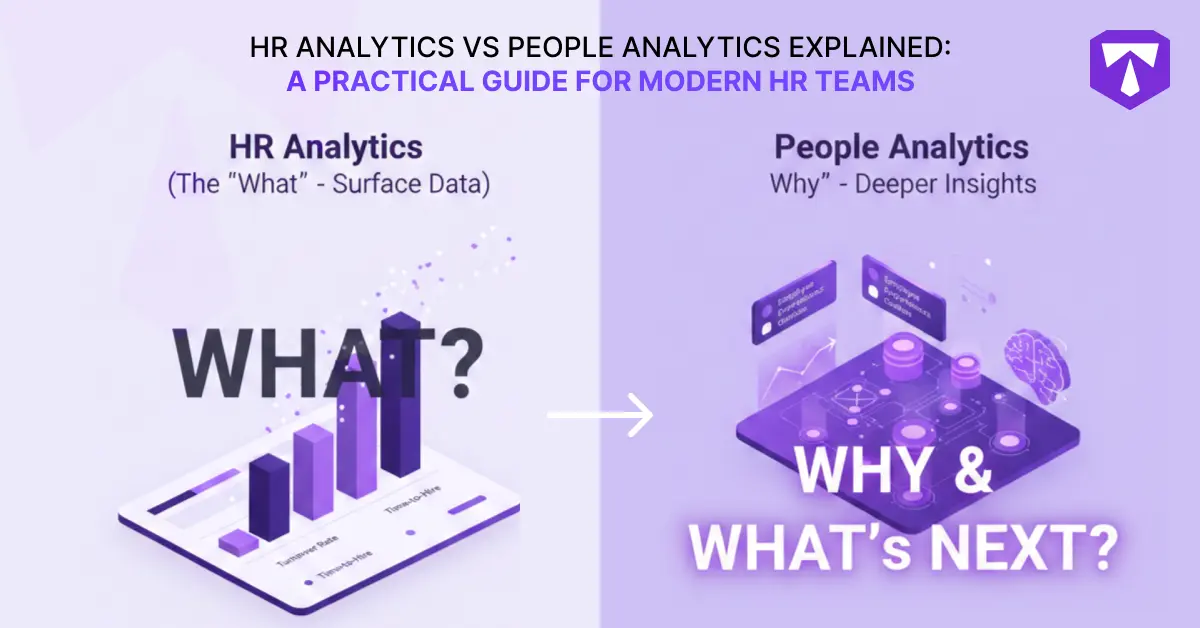
HR analytics and people analytics are frequently inaccurately used as synonymous terms, resulting in a lack of clarity for today's HR teams. While they both represent a discipline that relies on HR data analytics and aims to enhance the modern workforce, they are based on fundamentally different levels of complexity, focus, and strategic implications.
Understanding the butt difference between HR analytics and people analytics is not simply academic; it is important as it lays the foundation for identifying which HR-related analytics tools you need and how to appropriately use your data to transition from basic reporting to true strategic anticipatory analytics.
Here is a practical summary of the major differences and an explanation of the value of HR analytics and people analytics for your modern HR department.
The Main Distinctions: What vs. Why
The easiest way to find the differences is to attend to the questions each seeks to answer:
|
Discipline |
Focus Question |
Scope |
Strategic Value |
|
HR Analytics |
What happened? (Descriptive) |
HR Processes (e.g., recruitment, turnover, time-to-hire) |
Measures the efficiency of HR functions. |
|
People Analytics |
Why did it happen, and what will happen next? (Diagnostic & Predictive) |
The entire Employee Experience and Business Performance |
Informs business strategy and improves human capital ROI. |
HR Analytics: Evaluating HR Efficiency
HR analytics is the basis of data analytics within the HR function. It is primarily focused on assessing the efficiency and effectiveness of HR processes themselves. It is a backward-looking, descriptive area of analytics.
Key Features:
-
Process-Focused: It evaluates HR system performance.
-
Standard HR Metrics/KPIs: It draws on standard metrics to assess operational health.
- Descriptive Assessment: It informs us of what has happened and never prescribes action.
HR Analytics Examples:
- Turnover Rate: The percentage of employees who leave the organization during a specified timeframe.
- Time-to-Hire: The average number of days it takes to fill a given role.
- Training Costs Per Employee: The total training spend divided by the number of employees trained.
- Compliance Reporting: Data needed for regulatory reporting (e.g., diversity statistics).
Benefits for the Contemporary HR Teams:
HR analytics offers the required data infrastructure for operational accountability. It will answer core questions like, “Are we hiring fast enough?” and “What do we pay for training?” Insights into these two in particular are crucial for budget management and for HR reports outlining the health of the HR function.
Examples of People Analytics
- Flight Risk: Predicting which high-performing employees will likely leave within the next six months. This analysis is based on their compensation, tenure, and team engagement scores.
- Employee Productivity: Correlating team engagement survey results with sales results to demonstrate higher engagement results in an additional $X of revenue earned per employee.
- Sales Training Optimization: Diagnosing which training methods lead to new hires achieving quota faster and recommending an optimized curriculum.
- Attrition Cost: Calculating the real cost of attrition, beyond simply recruitment fees, including loss of productivity and knowledge transfer.
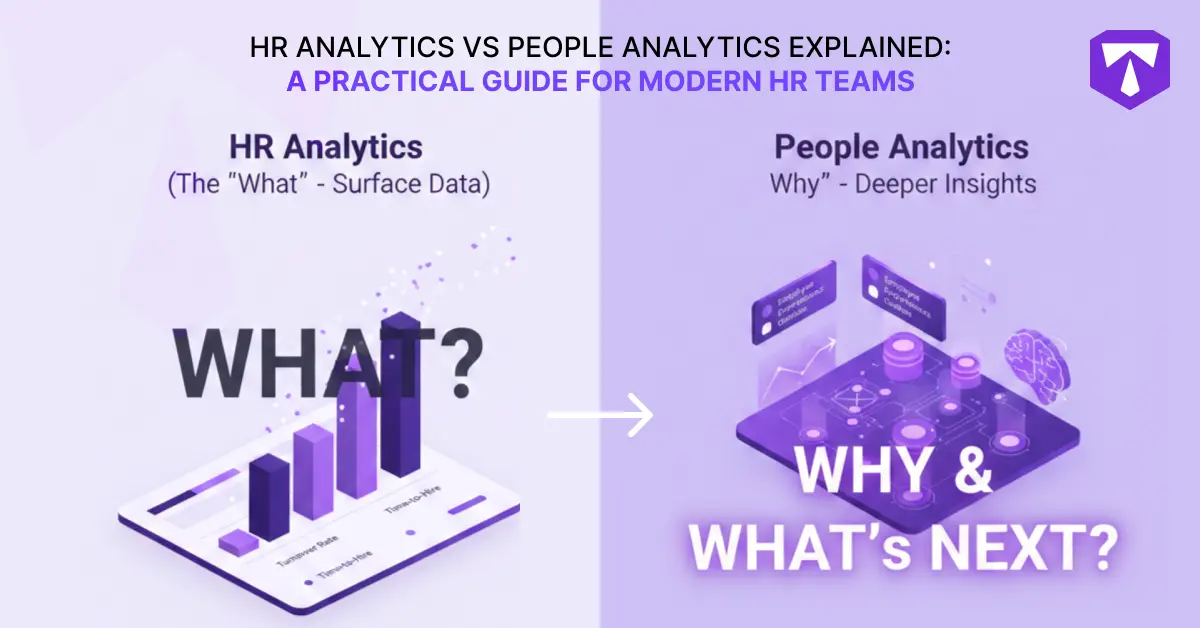
How People Analytics Enhances Decision-Making
People analytics is where HR really becomes a strategic partner. People analytics doesn’t just evaluate HR; it evaluates the effectiveness of the human capital ROI. People analytics provides HR insights that will aid organizations in making key decisions, including
- Is it worthwhile to invest $200k in your management training program? (People analytics may show your expected return would be through reduced turnover and increased productivity on teams).
- What are the drivers of low customer satisfaction? (The analysis may suggest a correlation with team tenure in certain departments).
Both Part of the Same Solution: How to Pair Them Up
The modern organization desires both. They interact in a productive manner as follows:
- HR Analytics gives you the clean data as an example, but at a fundamental level you will say the turnover was at 15%.
- People analytics takes the data and gives you business context: "The 15% turnover rate is strictly in our R&D department, and therefore our cost to turnover is $5 million of lost innovative value to the business and correlates directly with the manager's, who resides in the R&D department, poor leadership scores."
In essence, the opportunity to combine HR analytics and analytics in general allows for data-driven HR teams to move from a response-based reporting approach to a proactive-based strategic decision-making approach, optimizing the workforce for efficiency or a competitive advantage.